
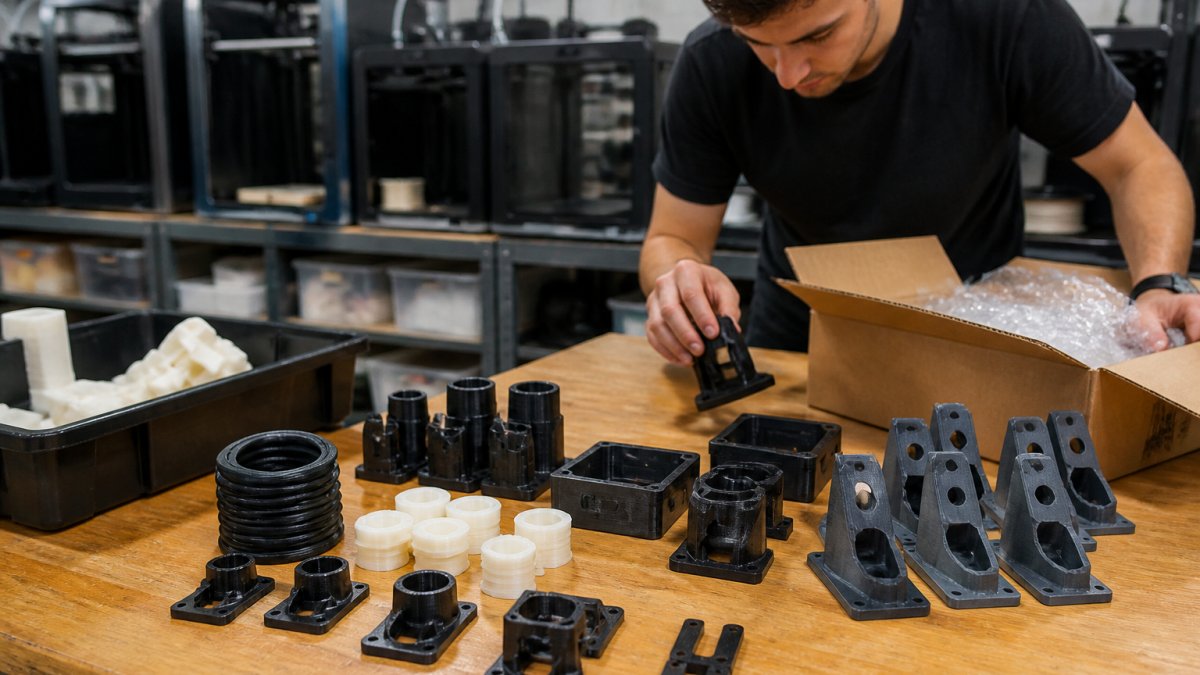
3D Print Service Turnaround Time: What to Expect
Table of Contents
- Understanding 3D Print Service Turnaround Time
- How Long Does 3D Printing Take: Machine Time vs. Total Lead Time
- 3D Printing Turnaround Time Factors That Matter Most
- 3D Printing Post-Processing Time and Finishing Requirements
- 3D Printing Service Lead Time: Beyond the Printer
- Typical Turnaround Times by Service Level and Technology
- How to Request and Verify a Reliable Delivery Estimate
- Balancing Turnaround Time, Cost, and Quality
- Frequently Asked Questions
Last Updated: October 10, 2026
Understanding 3D Print Service Turnaround Time
When you need a prototype, custom part, or branded promotional item fast, understanding 3D print service turnaround time becomes critical to your project timeline.
Most clients are surprised to learn that actual print duration is often the smallest piece of the timeline puzzle.
This guide breaks down the real factors that affect 3D print service turnaround time expectations, so you can plan accurately and avoid delays.
How Long Does 3D Printing Take: Machine Time vs. Total Lead Time
Actual Print Duration
The printer itself typically runs for hours, not days. A small part might print in 2-4 hours; a larger, complex part could take 12-24 hours. But that's just the machine time.
Print duration depends on part size, layer height, printing technology (FDM, resin, or MJF), and material density. The printer runs batches, so your part may queue behind others.
The Full Order-to-Delivery Timeline
Here's what a realistic timeline looks like from start to finish:
- File review and preparation, 1 business day
- Production queue wait, 2-5 business days (varies by service level)
- Actual printing, 4-48 hours depending on part size and complexity
- Post-processing, 1-3 business days (support removal, curing, finishing)
- Quality inspection, 1 business day
- Shipping, 1-5 business days depending on destination and method
Total typical timeline: 6-14 business days for standard service. Express options compress this to 3-7 business days.
That's why asking "how long does 3D printing take" without context leads to confusion. The printer is fast. Everything else takes time.
3D Printing Turnaround Time Factors That Matter Most
Part Size and Geometry
Bigger parts take longer to print. A nameplate measuring 4×6 inches prints in 2-3 hours; a functional prototype measuring 8×12×4 inches might take 12 hours or more. Size isn't linear, how the geometry nests on the build platform matters.
Complex geometry increases 3D printing turnaround time because intricate details, thin walls, and overhanging features require finer layer heights, extensive support structures, careful file review, and more finishing work.
Printing Technology and Material Selection
FDM printers are fast but require support removal and finishing. Resin printers produce fine details quickly but need curing time. MJF systems handle complex geometries efficiently with minimal support. Standard plastics print faster than reinforced materials.
Material choice affects print duration, post-processing time, and final quality.
Layer Height, Build Orientation, and Support Structures
Layer height (finer layers take longer but look better), build orientation, and support structures all affect turnaround. Smart orientation and minimal support design can cut 3D printing turnaround time by 30-40% without sacrificing quality.
3D Printing Post-Processing Time and Finishing Requirements
Support Removal and Curing
After printing, supports must be removed and parts may need curing (resin) or thermal/chemical post-processing (FDM). This phase typically adds 1-3 business days depending on part complexity and finishing level.
Surface Finishing and Quality Inspection
Finishing ranges from minimal (support removal only) to extensive (sand, prime, paint, polish), adding hours to days. Quality inspection ensures parts meet specifications. This entire phase typically adds 2-3 business days to your 3D print service turnaround time.
3D Printing Service Lead Time: Beyond the Printer
File Preparation and Design Review
Before printing, engineers review files for printability, design optimization, material compatibility, and tolerance feasibility. This step usually takes 1 business day for straightforward files, longer if design changes are needed.
Production Queue and Batch Scheduling
Service providers batch jobs to maximize efficiency. Standard queues have a 3-5 business day wait; express options reduce this to 24 hours or less. During peak periods, queues grow longer. Batch production of multiple parts can improve per-part turnaround.
Shipping and Delivery Time
Shipping adds 1-5 business days depending on distance, method, and destination. Some providers offer local pickup or same-day delivery in major cities.
Typical Turnaround Times by Service Level and Technology
Economy Service Timelines
Economy service prioritizes cost over speed. Expect longer queue times and standard shipping.
| Timeline Phase | Typical Duration |
|---|---|
| File review | 1 business day |
| Production queue | 5-7 business days |
| Printing | 4-24 hours |
| Post-processing | 2-3 business days |
| Shipping | 3-5 business days |
| Total | 12-20 business days |
Economy works well for projects without tight deadlines. It's the most cost-effective option.
Standard and Express Options
Standard service balances cost and speed. Express prioritizes speed at a premium.
Standard service typically delivers in 6-10 business days total. Express compresses this to 3-5 business days by reducing queue time, prioritizing your job, and using faster shipping.
Some providers offer next-business-day printing for simple parts, though this premium option costs significantly more.
Rush Orders and Same-Day Service
Same-day service is rare and expensive. It requires:
- Simple geometry, Complex parts can't be rushed without quality issues
- Available capacity, The printer must have immediate availability
- Local pickup, Shipping time eliminates same-day delivery for most locations
Same-day service makes sense for emergency replacements or last-minute trade show needs, but it's not practical for most projects.
How to Request and Verify a Reliable Delivery Estimate
Information You Need to Prepare
A reliable estimate requires specific details about your project. Prepare this information before requesting a quote to avoid back-and-forth delays:
Upload your STL file for an instant quote →
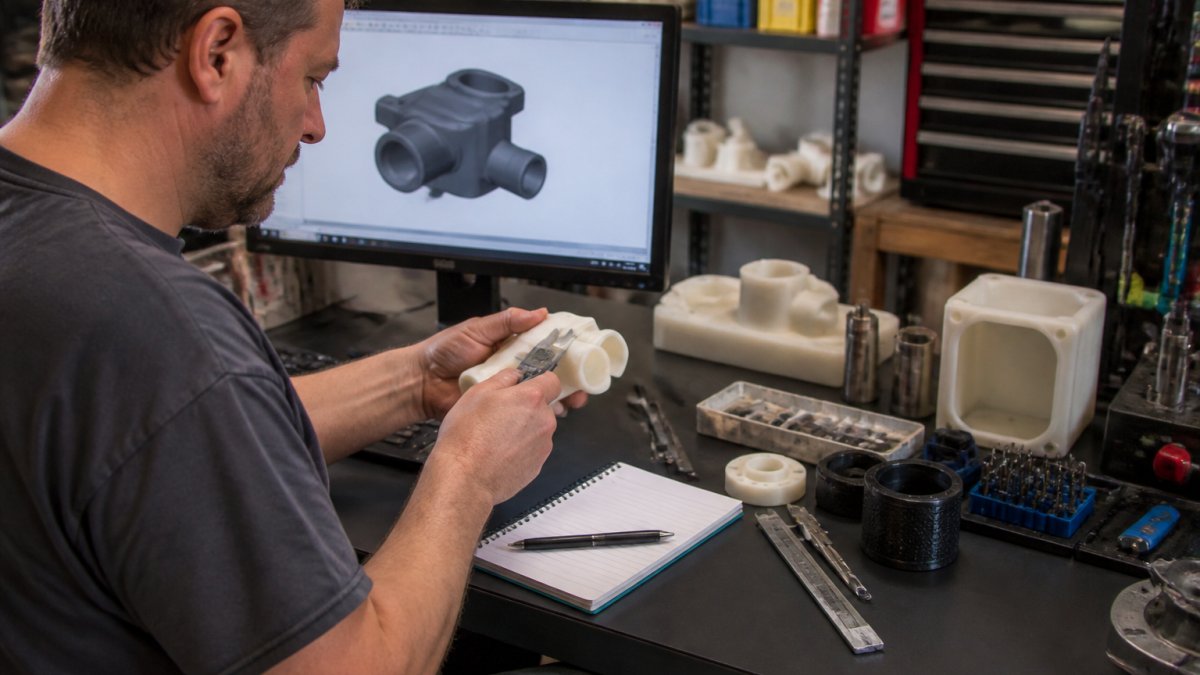
- STL or CAD file in a standard format, Ensure the file is export-ready (STL, STEP, or OBJ) and has been checked for errors such as non-manifold geometry or missing faces
- Quantity, How many parts you need, this affects batch scheduling and per-unit turnaround
- Material preference, What material suits your application (standard resin, tough nylon, flexible TPU, etc.)
- Finish level, Do you need raw prints, support removal only, sanded surfaces, or full paint/coating?
- Required delivery date, When do you actually need the parts? Specify calendar date, not "ASAP"
- Tolerance requirements, How precise must dimensions be? Typical 3D printing tolerances are ±0.5 mm; tighter tolerances require post-processing and add time
- Special requirements, Multi-color printing, specific Pantone colors, texture preferences, or assembly/packaging needs
The Estimate Verification Checklist
Once you receive an estimate, verify it covers the full order-to-delivery timeline, not just machine time. A complete estimate should itemize:
1. File Review Window
- Stated as 1 business day or longer if design changes are anticipated
- Should specify whether the quote assumes the file is printable as-is or if design consultation is needed
2. Production Queue Wait
- Clearly labeled as "standard," "express," or "rush" queue
- Should state the current queue depth (e.g., "2-3 business days" or "5-7 business days") and note that this may vary
- Should clarify whether the estimate assumes immediate availability or reflects typical lead times
3. Printing Duration
- Should break down by part (e.g., "Part A: 6 hours, Part B: 12 hours") for multi-part orders
- Should note the printing technology used (FDM, resin, MJF, etc.) so you understand the process
- Should account for setup time and any test prints if geometry is novel
4. Post-Processing Time
- Support removal, curing, and finishing should be itemized separately
- Should state the finish level (raw, cleaned, sanded, primed, painted, etc.)
- Should note if finishing is in-house or outsourced, as outsourcing can add 1-2 business days
5. Quality Inspection and Packing
- Should state whether dimensional verification or fit testing is included
- Should specify packing method (standard box, custom packaging, etc.)
6. Shipping
- Should state the carrier and method (ground, 2-day, overnight)
- Should provide an estimated delivery window, not just a ship date
- Should clarify whether shipping cost is included or quoted separately
7. Total Calendar Days
- Should state the final delivery date or date range, not just the sum of business days
- Should clarify whether weekends and holidays are excluded
- Should note any cut-off times (e.g., "orders placed after 2 PM ship the next business day")
Red Flags in an Estimate
Be cautious if an estimate:
- Quotes only machine time without mentioning queue, post-processing, or shipping, this is incomplete and likely optimistic
- Uses vague language like "approximately," "typically," or "up to" without a range or worst-case scenario
- Does not distinguish business days from calendar days, making it impossible to plan a real deadline
- Assumes your file is perfect without mentioning file review or design consultation
- Does not account for your quantity, a single part and 50 parts have very different timelines
- Quotes the same turnaround for all materials and finishes, this suggests the estimate is generic, not specific to your project
How to Communicate Your Deadline
When requesting an estimate, state your deadline clearly:
- Specify a calendar date, not "as soon as possible." For example: "I need delivery by Friday, March 14th."
- Include your time zone if working with a remote provider
- State whether the deadline is flexible or fixed, this helps the provider recommend the right service level
- Ask the provider to confirm whether they can meet your deadline before you commit
If a provider cannot meet your deadline at any service level, they should tell you immediately. If they commit to a deadline and miss it, that's a reliability issue to note for future projects.
Documenting the Estimate
Once you receive an estimate you're satisfied with, request it in writing (email or quote document). This creates a record and prevents misunderstandings. The written estimate should include:
- Your project name or order number
- The file name and version (so you both reference the same design)
- The quoted price and any conditions (e.g., "price valid for 7 days")
- The estimated delivery date or date range
- Any assumptions (e.g., "assumes standard finish and ground shipping")
- Contact information for questions or changes
If you need to modify the project after the estimate is quoted, ask for a revised estimate before proceeding. Changes to material, quantity, finish, or deadline can significantly alter turnaround.
Balancing Turnaround Time, Cost, and Quality
Fast turnaround, low cost, and high quality, you can typically achieve two of the three.
Rush services cost more because they pull resources from other projects.
Here's how to think about the trade-off:
Tight deadline, flexible budget? Choose express service with professional finishing. You'll pay premium pricing but get fast, high-quality results.
Fixed budget, flexible timeline? Choose economy service. Accept the longer queue time and standard finishing.
High-quality requirement, moderate timeline? Choose standard service with professional finishing.
The key is being honest about your actual needs.
When you're ready to move forward with a 3D printing project, the difference between a smooth experience and a frustrating one comes down to realistic expectations. At Alex 3D Print Us LLC, we make this simple: upload your STL file, get an instant quote that reflects real turnaround based on your specifications, and work with a team that handles complex projects, multi-color printing, and custom finishing.
Frequently Asked Questions
What is the average turnaround time for a 3D print service?
Turnaround time depends on your service level and part complexity. Economy service typically takes 6-10 business days from file submission to delivery. Standard service ranges 2-4 business days, while express and rush options can deliver within 1-2 business days or same-day for simple, small parts. This includes file review, printing, post-processing, quality inspection, and shipping. Actual print duration is only one part of the total timeline.
How long does 3D printing take for a small batch order?
Print time for a small batch depends on part size, complexity, and technology. FDM printing of small functional prototypes typically takes 4-12 hours per part. Resin printing is faster for detailed pieces, often 1-4 hours per part. However, batch production affects lead time: multiple parts can be printed simultaneously on a single build platform, reducing per-unit turnaround. Add 2-5 business days for file preparation, post-processing, and quality checks before shipping.
What factors affect 3D printing service lead time the most?
The biggest factors are part size and geometry, printing technology, production queue, and post-processing requirements. Large or geometrically complex parts take longer to print and finish. Resin printing and multi-material technologies have different timelines than standard FDM. If the service provider has a full production queue, your order may wait several business days before printing begins. Finishing steps like support removal, curing, and surface treatment can add 2-7 business days.
How do I get an accurate turnaround estimate for my project?
Provide your STL file, specify desired material, quantity, and required delivery date. Be clear about post-processing needs: do you need support removal only, or full surface finishing and painting? Mention any tight tolerances or quality standards. A professional service will review your design for printability, flag potential issues, and provide a detailed timeline that breaks down file review, print duration, finishing, and shipping separately. Ask about cut-off times for rush orders and how they handle design revisions.