
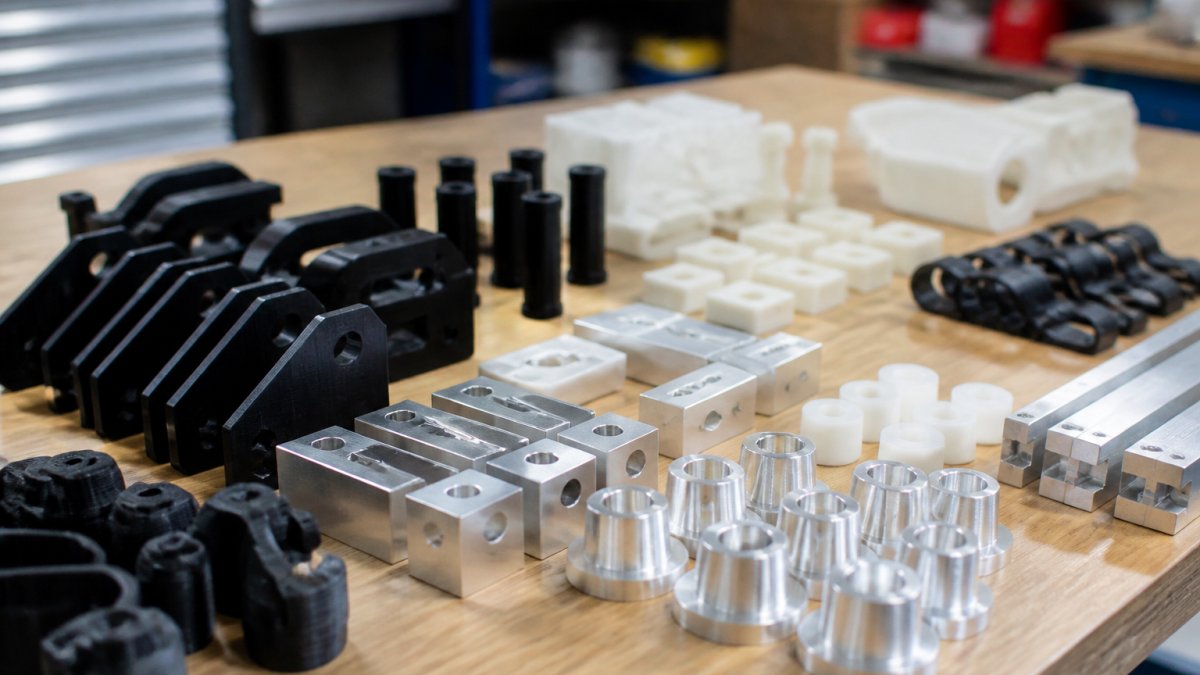
Small Batch Custom Fabrication Pricing: 2026 Guide
Table of Contents
- What Drives Small Batch Custom Fabrication Pricing
- How to Calculate Fabrication Cost Estimate for Your Project
- Cost Per Part Calculation: Breaking Down Unit Economics
- Fabrication Labor Rates and Shop Time Allocation
- Low-Volume Production Pricing and Economies of Scale
- Cutting, Bending, Welding, and Finishing: Process-Specific Costs
- Design-for-Manufacturability Changes That Reduce Cost
- Comparing Quotes and Identifying Hidden Costs
- Frequently Asked Questions
Last Updated: October 21, 2026
What Drives Small Batch Custom Fabrication Pricing
Small batch fabrication pricing is driven by five factors: material selection, part geometry, fabrication processes, labor allocation, and order volume.
Order 10 custom parts and you pay the same setup and programming effort as someone ordering 1,000, split across one-hundredth of the quantity.
At Alex 3D Print Us LLC, we help businesses bring their ideas to life with precision and quality.
Material Type, Grade, and Thickness
Material selection is often the largest single cost variable in small batch fabrication pricing.
Thickness matters equally. A 0.050-inch sheet metal part requires different cutting speeds and finishing than a 0.125-inch part.
Grade also drives secondary costs: high-carbon steel may need stress-relief after welding, titanium demands specialized fluids and slower feeds, and stainless work-hardens, requiring more tool changes.
Part Size, Weight, and Material Usage
Part size drives labor rates directly: a 2-inch bracket takes less time to cut, handle, and finish than a 12-inch assembly.
Weight affects handling, fixturing, and setup time. A 5-pound forged component needs specialized clamping and multiple setups the fabricator can't amortize across high volume.
Material usage is where small batch fabrication pricing diverges most from mass production.
Design Complexity and Geometry
Complexity is the hidden cost multiplier in small batch fabrication pricing.
Internal geometry, pockets, channels, undercuts, requires additional machine passes and tool changes.
Tolerances compound complexity costs. A ±0.010-inch part requires slower feeds, more tool changes, and extra inspection; a ±0.050-inch part moves faster with minimal inspection.
How to Calculate Fabrication Cost Estimate for Your Project
A fabrication cost estimate breaks into three components: material cost, setup and programming cost, and per-unit production cost.
Request an itemized quote separating these three elements. A quality fabricator provides this without hesitation; if they won't, you lack the information needed to decide on design changes or volume commitments.
Separating Setup Costs from Per-Unit Production
Setup cost includes everything before the first part: programming, fixture design, tool selection, machine calibration, and the test run.
Setup cost is roughly fixed whether you order 10 or 100 units.
Always ask for setup cost separately when comparing quotes. Some fabricators embed it in the per-unit price, making comparison impossible; others reduce setup for repeat orders.
Material Cost and Scrap Allowance
Material cost should be straightforward: quantity needed plus waste allowance, multiplied by price per unit weight or area.
A 10-15% scrap allowance is standard on small batches, covering cutting loss, edge trimming, and rejected parts.
Ask whether the quote assumes 10% or 15% scrap and whether it's geometry-specific or a blanket estimate.
Cost Per Part Calculation: Breaking Down Unit Economics
Your true unit cost is (material cost + setup cost + per-unit labor) ÷ quantity ordered, the number that determines whether small batch fabrication pricing makes sense for your project.
Breaking this down reveals where reduction is possible. You can't negotiate material prices on small orders, but you can reduce setup complexity through design changes and per-unit labor through process optimization.
How Setup Costs Affect Unit Price
Setup costs create a hyperbolic cost curve: as volume increases, per-unit cost drops sharply at first, then flattens.
This curve is why many fabricators have minimum order quantities.
Understanding this dynamic changes how you approach small batch fabrication pricing. If you're ordering 10 parts today but expect to order 50 more in 3 months, mention it.
Scaling from 10 Parts to 100 Parts
The jump from 10 to 100 parts typically reduces per-unit cost by 60-75%, but the reduction is not linear.
The sweet spot for cost-effective small batch fabrication pricing is typically 25-50 parts. Below that, setup costs dominate.
If you're considering a volume increase, request a revised quote at the higher quantity before committing.
Fabrication Labor Rates and Shop Time Allocation
Labor is the second-largest cost component in small batch fabrication pricing, after material. Understanding how labor is allocated, and where it can be optimized, is critical to negotiating fair pricing.
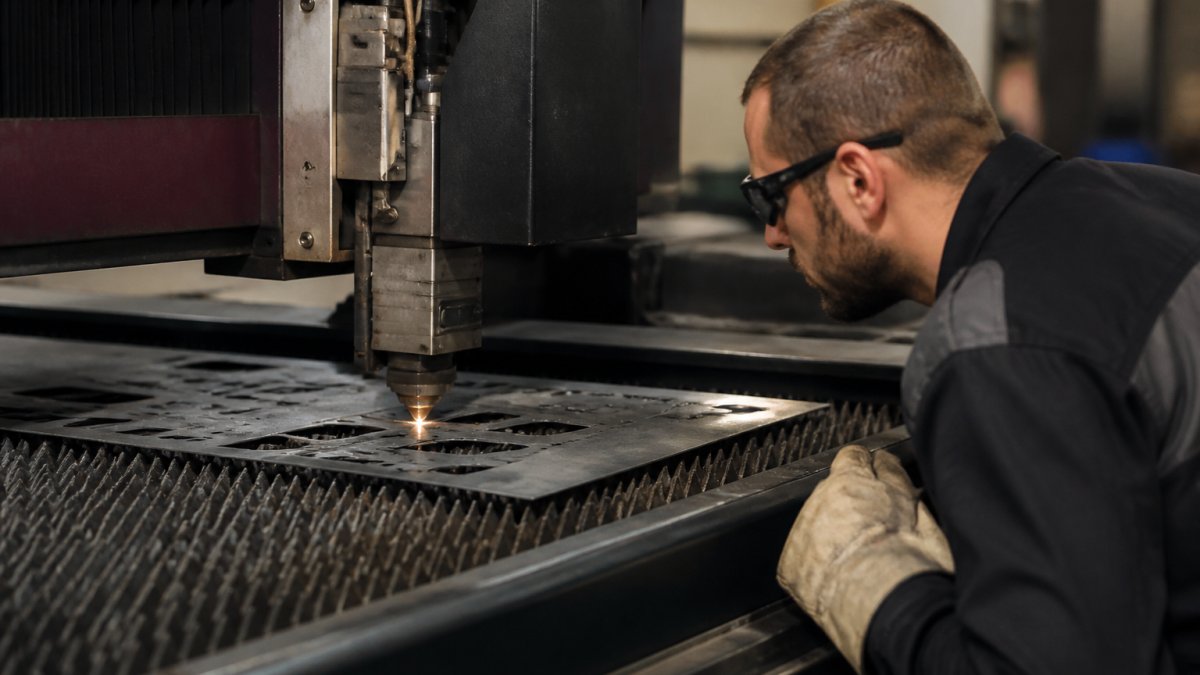
Fabrication labor rates typically range across a spectrum depending on the operation. Programming and setup command premium rates because they require specialized expertise.
Programming, Setup, and Machine Time
Programming time is the most opaque component of small batch fabrication pricing because it's invisible to the customer.
Setup time includes fixture preparation, tool selection, and machine calibration.
Machine time is the time the equipment actually runs. This is where per-unit efficiency matters most.
Request a breakdown of programming, setup, and machine time separately when you get a quote.
Assembly, Welding, and Finishing Labor
Assembly labor is often underestimated in small batch fabrication pricing.
Finishing labor includes deburring, grinding, polishing, and surface treatment. A part with sharp edges requires deburring labor.
The cost per unit for finishing is relatively predictable, it scales with part size and complexity.
Low-Volume Production Pricing and Economies of Scale
Small batch fabrication pricing reflects the reality that low-volume production is inherently less efficient than high-volume production. Understanding why, and where the efficiency gains actually occur, helps you make smarter decisions about order quantity and design.
Upload your STL file for an instant quote →
Why Small Batches Cost More Per Unit
Small batches cost more per unit because fixed costs are concentrated.
Additionally, small batches often require custom fixtures, specialized tooling, or one-off setup that has no reuse value.
Material nesting efficiency also suffers on small batches. A fabricator with 50 custom orders to run this week can carefully plan material usage to minimize waste across all jobs.
Prototype-to-Production Pricing Transition
The transition from prototype to production is where small batch fabrication pricing changes most dramatically.
Many fabricators offer reduced setup costs on production runs that follow prototypes, because much of the programming and fixture work is already complete.
The economics shift at certain volume thresholds. At 50 parts, dedicated tooling starts to make sense. At 100 parts, process optimization becomes worthwhile.
Cutting, Bending, Welding, and Finishing: Process-Specific Costs
Each fabrication process carries its own cost structure and labor profile. Understanding process-specific costs helps you evaluate quotes and identify design changes that reduce cost.
Laser Cutting and Precision Machining Setup
Laser cutting is often the most cost-effective process for small batch sheet metal fabrication, but setup costs can be significant.
Precision machining (CNC milling or turning) carries higher setup costs because programming is more complex and setup time is longer.
The per-unit machine time for cutting or machining is relatively predictable and doesn't vary much with quantity.
Bending, Forming, and Assembly Operations
Bending and forming operations are labor-intensive on small batches because they often require manual setup and operator attention.
Assembly operations scale differently. Hand assembly labor is roughly linear with quantity, assembling 100 parts takes roughly 10 times as long as assembling 10 parts.
Welding and fastening are similarly labor-intensive. Each weld joint requires operator time, and quality inspection adds additional labor.
Surface Treatment and Coating Expenses
Surface treatment and coating add significant cost to small batch fabrication pricing, particularly for aesthetic or corrosion-resistance requirements.
Anodizing and plating are even more labor-intensive because they require chemical processing and quality inspection.
Finishing operations like deburring, grinding, or polishing are labor-intensive and scale roughly linearly with part count and complexity.
Design-for-Manufacturability Changes That Reduce Cost
The most effective way to reduce small batch fabrication pricing is through design changes that reduce complexity, setup requirements, or labor. These changes often cost nothing to implement during the design phase but save hundreds of dollars in production.
Tolerance Optimization and Quality Requirements
Tighter tolerances increase cost disproportionately.
Evaluate whether every tolerance in your design actually needs to be tight. Many parts function perfectly well with looser tolerances.
Surface finish requirements have a similar impact. A cosmetic finish specification requires additional labor for sanding, polishing, or coating.
Geometry Simplification and Material Substitution
Simplifying geometry is one of the most effective cost-reduction strategies. Avoid sharp inside corners where possible, use radii instead.
These geometry changes often improve manufacturability without compromising function.
Material substitution can also reduce cost. A part specified in stainless steel might function equally well in aluminum, which machines faster and costs less.
Comparing Quotes and Identifying Hidden Costs
Getting multiple quotes is essential, but comparing them accurately requires understanding what's included and what's not. A quote that appears cheap might exclude finishing labor or inspection. A quote that appears expensive might include value-added services you didn't consider.
What Should Be Included in a Quote
A complete quote should itemize: material cost, scrap allowance, setup and programming cost, per-unit production labor, finishing and coating labor, and quality inspection.
Clarify what's included in delivery. Does the quote include packaging? Labeling? Shipping?
Some fabricators include these; others charge separately.
Ask about design review. Will the fabricator flag potential manufacturability issues before production, or do you get what you asked for regardless?
Lead Time, Rush Fees, and Capacity Constraints
Lead time is a major cost variable in small batch fabrication pricing.
Ask about capacity.
Repeat orders often have shorter lead times and lower costs because setup is already complete.
Request a detailed timeline. When does programming start? When does fabrication begin?
Frequently Asked Questions
How do I estimate fabrication cost for a small batch order?
Start by identifying material type and thickness, part dimensions and weight, design complexity, and required operations (cutting, bending, welding, finishing). Separate setup costs (programming, tooling, first-article inspection) from per-unit production costs. Add material waste allowance (typically 10-15%) and labor time for each operation. Request quotes from multiple fabricators specifying your exact quantity to see how unit cost changes with volume. Most fabricators provide cost breakdowns by process, helping you identify which operations drive expense.
What factors have the biggest impact on small-batch fabrication pricing?
Setup costs, material grade, part complexity, and order quantity are the primary drivers. Setup costs (programming, tooling, first runs) get spread across fewer units in small batches, raising per-unit price significantly. Material thickness and grade directly affect material cost and cutting time. Complex geometries, tight tolerances, and multi-step operations (welding, assembly, finishing) require more labor and specialized equipment. Larger orders reduce per-unit cost through setup cost amortization and faster machine cycles.
How can I reduce small batch custom fabrication pricing without sacrificing quality?
Work with your fabricator on design-for-manufacturability (DFM) reviews to simplify geometry, relax tolerances where possible, and substitute materials. Combine multiple small orders into one larger run to spread setup costs. Choose standard material grades and thicknesses that fabricators stock. Minimize post-processing by designing parts to exit the machine ready-to-use. Consider alternative processes: sheet metal instead of machined parts, or laser engraving instead of complex machining. Provide clear, complete CAD files to reduce programming time and errors.
What's the difference between cost per part calculation for 10 units versus 100 units?
Setup costs (programming, tooling, first-article inspection) might total $500-$1,500 per job. On 10 units, that adds $50-$150 per part. On 100 units, it adds $5-$15 per part. Material and labor per unit may also decrease slightly with larger runs due to faster machine cycles and bulk material pricing. If per-unit production cost is $20 and setup is $100 total, 10 units cost $30 each; 100 units cost $21 each. This demonstrates why small batches have higher per-unit costs and why repeat orders become more economical.
Should I use a fabrication cost estimate tool or request manual quotes?
Use both. Online instant quote tools (like those from 3D printing and laser services) give quick ballpark estimates for simple parts and help you compare vendors fast. Manual quotes from fabricators are essential for complex assemblies, multi-material projects, and custom processes because tools cannot account for all variables. Manual quotes also reveal hidden costs, lead times, and capacity issues. For small batches where precision matters, always follow an online estimate with a detailed quote conversation to confirm assumptions about material, tolerances, and finish.
What are typical fabrication labor rates, and how do they affect my quote?
Labor rates vary by region, shop type, and complexity but typically range from $50-$150+ per hour for skilled fabrication work. Setup and programming might be billed at higher rates ($75-$200/hour) because they require expertise. Your quote should itemize labor by operation: programming time, machine setup, cutting/machining time, assembly, welding, finishing, and inspection. A simple part might have 1-2 hours of labor; complex assemblies might have 10-20+ hours. Always ask your fabricator to break down labor by operation so you can identify which steps drive cost.
How does lead time affect small batch custom fabrication pricing?
Standard lead times (2-4 weeks) reflect normal shop scheduling and are factored into baseline pricing. Rush orders (3-5 days) typically incur 25-50% premiums because they disrupt shop schedules and may require overtime. Express turnaround (24-48 hours) can double or triple costs. For small batches, longer lead times reduce cost because your job can be scheduled between larger orders. If you need parts in 3-5 days, expect to pay more. Plan ahead when possible, and ask your fabricator about their current capacity and standard lead times before requesting a quote.