
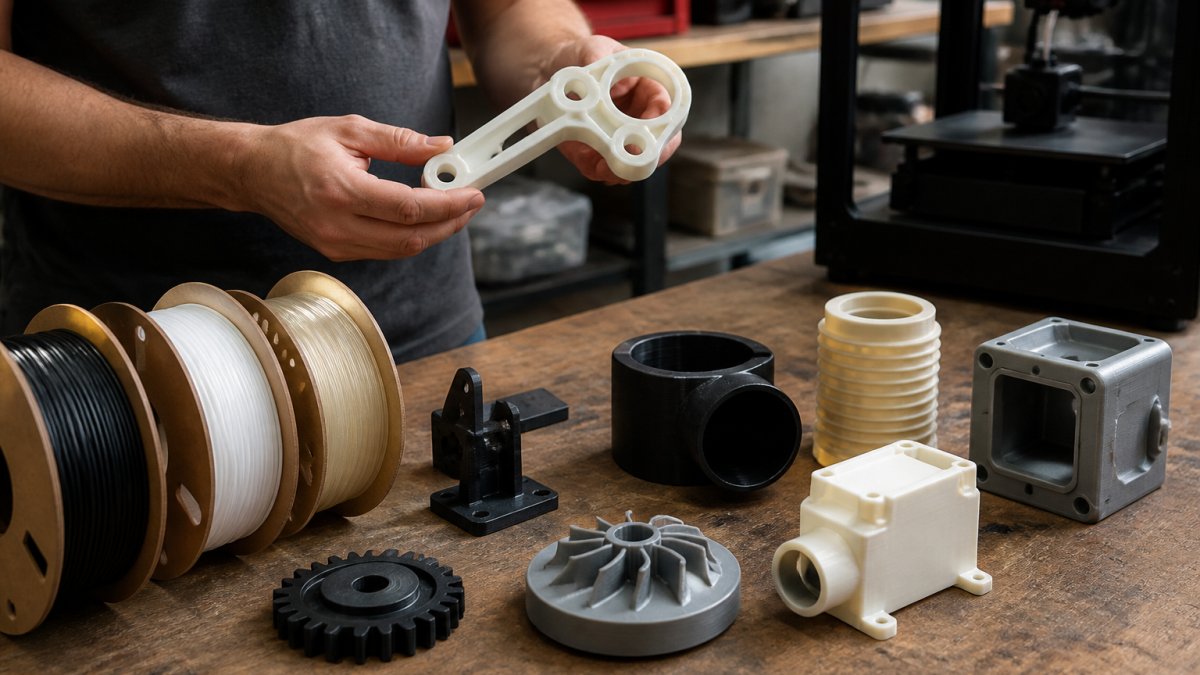
Best 3D Printing Materials for Functional Prototypes
Table of Contents
- What Makes a Material Suitable for Functional Prototypes
- PLA vs PETG vs ABS: Core Differences for Functional Parts
- Strongest 3D Printing Filament for Load-Bearing Applications
- Heat-Resistant 3D Printing Materials and Thermal Stability
- Nylon 3D Printing Filament: Flexibility and Impact Resistance
- Post-Processing and Material Selection for Functional Success
- Material Compatibility and Assembly Considerations
- Choosing the Right Material: A Decision Framework
- Frequently Asked Questions
Last Updated: October 9, 2026
What Makes a Material Suitable for Functional Prototypes
Selecting the best 3D printing materials for functional prototypes requires understanding how material properties translate to real-world performance. Unlike aesthetic models, functional prototypes must withstand mechanical stress, thermal cycling, chemical exposure, and assembly processes.
We work with engineers and product designers daily who face this exact decision. The most common mistake is selecting a material based on ease of printing rather than functional requirements. PLA prints beautifully but shatters under load. ABS handles impact but warps during cooling.
Functional prototypes demand materials with specific properties: tensile strength for load-bearing applications, impact resistance for drop testing, thermal stability for heat exposure, and dimensional stability for tight tolerances. The material must also accommodate post-processing, annealing, vapor smoothing, or mechanical reinforcement, that improves performance beyond raw print quality.
PLA vs PETG vs ABS: Core Differences for Functional Parts
Understanding the core differences between these three materials is essential for making the right choice. Each represents a distinct trade-off between printability, durability, and cost.
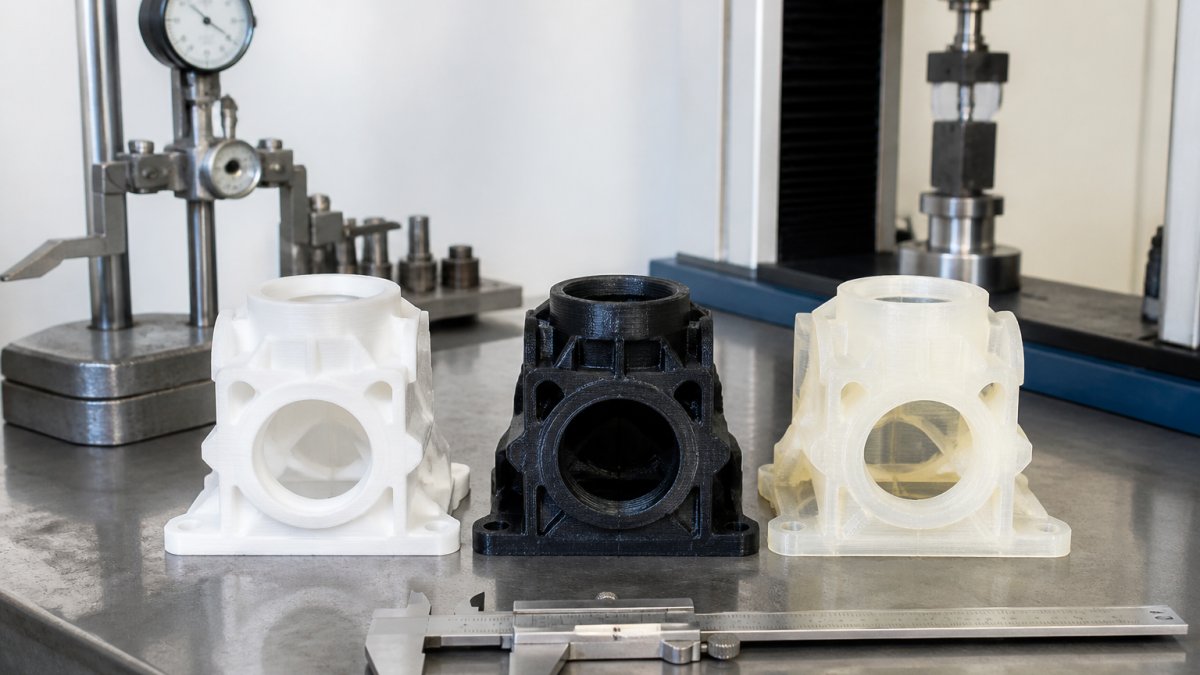
PLA: Ease vs. Performance Trade-offs
PLA is the most forgiving filament to print. It requires no heated bed, minimal warping, and produces dimensionally stable parts immediately after printing. For visual prototypes and low-stress applications, PLA works well.
The problem emerges under mechanical stress. PLA exhibits low impact resistance and poor ductility, it fractures rather than flexes. Tensile strength is moderate, but creep becomes significant under sustained load.
Post-processing options are limited. While annealing can improve layer adhesion, it cannot fundamentally change PLA's material properties. For functional prototypes requiring impact absorption or thermal stability, PLA is a poor choice.
PETG: The Balanced Choice
PETG sits between PLA and ABS in the performance spectrum. It offers better impact resistance than PLA while remaining more printable than ABS.
Thermal stability improves significantly; PETG withstands temperatures up to 80°C before softening, making it suitable for applications near electronics or in warm environments. Layer adhesion is strong, reducing delamination failures common in other materials.
The trade-off is print complexity. PETG requires a heated bed (around 80°C), careful cooling management to prevent warping, and slower print speeds than PLA. Nozzle temperature must be precisely controlled.
For most functional prototypes, PETG represents the practical sweet spot. It handles mechanical testing, thermal cycling, and assembly stress without the difficulty of ABS.
ABS: Maximum Durability, Higher Difficulty
ABS delivers superior mechanical properties. Tensile strength is high, impact resistance is excellent, and thermal stability extends to 100°C. Parts maintain dimensional accuracy under load and resist fatigue better than PETG.
The cost is complexity. ABS requires heated beds (100°C+), enclosed chambers to manage cooling rates, and careful nozzle temperature control. Warping is common. Print failures increase.
Cooling must be gradual to prevent stress concentrations that weaken parts.
Post-processing demands are higher. ABS benefits from annealing and vapor smoothing, both of which improve mechanical properties and surface finish. These steps require equipment and expertise.
Reserve ABS for applications where PETG's performance is insufficient. Load-bearing components, high-temperature environments, and chemical-resistant requirements justify the extra effort. For standard functional prototypes, ABS adds complexity without proportional benefit.
Strongest 3D Printing Filament for Load-Bearing Applications
Load-bearing prototypes demand materials with high tensile strength and resistance to creep. The strongest 3D printing filament for functional prototypes must maintain dimensional stability under sustained force and resist fatigue during repeated stress cycles.
PETG and ABS both qualify, but the choice depends on load magnitude and environmental conditions. For moderate loads (under 5 kg continuous pressure), PETG provides sufficient strength with manageable print complexity.
Print orientation dramatically affects load-bearing performance. Parts oriented with stress parallel to layer lines experience 20-30% higher failure rates than parts oriented perpendicular.
Support structure design also impacts strength. Supports create stress concentrations at removal points. Designing parts to minimize support contact, or placing supports in non-critical areas, preserves load-bearing capacity.
Heat-Resistant 3D Printing Materials and Thermal Stability
Thermal stability determines whether a prototype functions in real-world conditions. Heat-resistant 3D printing materials must maintain dimensional stability and mechanical properties across temperature ranges.
Glass transition temperature (Tg) is the critical metric. Below Tg, the material behaves as a rigid solid. Above Tg, it softens and loses structural integrity.
For applications exposed to sustained heat, ABS is the baseline requirement. PETG works for moderate temperatures. PLA fails in warm environments. However, raw Tg values don't tell the complete story.
Post-processing improves thermal stability. Annealing PETG or ABS increases Tg by 5-10°C and improves HDT significantly. The process involves slow heating to near-Tg temperature, holding for several hours, then slow cooling. Rapid cooling negates the benefits.
Nylon 3D Printing Filament: Flexibility and Impact Resistance
Nylon represents a distinct category beyond PLA, PETG, and ABS. Nylon 3D printing filament offers exceptional impact resistance and flexibility, making it ideal for parts that must absorb shock without breaking.
Nylon has high ductility, it flexes significantly before fracturing. Tensile strength is moderate but consistent across temperature ranges. Impact resistance is superior to all three standard materials.
The drawback is printability and moisture sensitivity. Nylon absorbs moisture from air, which degrades mechanical properties and causes dimensional instability. Filament must be stored in sealed containers with desiccant and dried before printing.
Nylon also requires post-processing for functional performance. Annealing is essential to improve stiffness and reduce creep. Without annealing, nylon parts deform under sustained load.
Upload your STL file for an instant quote →
Post-Processing and Material Selection for Functional Success
Material selection is incomplete without understanding post-processing requirements. The raw print is rarely the final product.
Annealing is the most important post-processing step for functional prototypes. The process improves layer adhesion, increases tensile strength, reduces internal stress, and improves thermal stability.
Mechanical finishing, sanding, polishing, or machining, addresses surface roughness and dimensional accuracy. 3D-printed surfaces are inherently rough, with layer lines creating stress concentrations.
Vapor smoothing (acetone exposure for ABS, specialized solvents for others) improves surface finish and dimensional stability by dissolving surface layers.
Chemical treatment, painting, coating, or sealing, protects against environmental exposure. Uncoated prints absorb moisture and degrade over time.
The material choice must account for post-processing feasibility. Functional success depends on the complete workflow, not just the printing step.
Material Compatibility and Assembly Considerations
Functional prototypes rarely exist as single pieces. Assembly with hardware, electronics, or other components introduces new material compatibility requirements.
Metal inserts (threaded brass inserts, heat-set inserts) are common in 3D-printed parts. Insertion requires heating to melt the surrounding plastic.
Adhesive bonding requires material compatibility. Cyanoacrylate (super glue) works on all four materials but creates brittle joints.
Mechanical fastening (bolts, screws) creates stress concentrations. Pilot holes reduce splitting, but material choice affects reliability. ABS tolerates tight fastening better than PLA.
Thermal cycling during assembly can cause problems. If assembly involves heat (soldering, welding, or thermal bonding), the material must withstand those temperatures.
The strongest prototype fails if assembly destroys it. Material selection must account for the complete assembly process, not just the printed part's mechanical properties.
Choosing the Right Material: A Decision Framework
Selecting the best material requires matching functional requirements to material capabilities. Start with the most demanding requirement and work backward.
| Requirement | Best Material | Alternative | Avoid |
|---|---|---|---|
| Low cost, visual prototype | PLA | PETG | ABS, Nylon |
| Moderate load-bearing | PETG | ABS | PLA |
| High load or impact | ABS or Nylon | PETG | PLA |
| Heat resistance (80°C+) | ABS | PETG | PLA |
| Flexibility and impact | Nylon | PETG | PLA, ABS |
| Chemical exposure | ABS | Nylon | PETG, PLA |
| Tight tolerances | PETG | ABS | PLA |
| Fast turnaround | PLA | PETG | ABS, Nylon |
If your prototype must survive load testing, heat exposure, and assembly stress simultaneously, ABS is likely necessary despite its complexity.
Consider your team's capabilities. If post-processing infrastructure is limited, PETG becomes more attractive because it requires less intervention.
Cost matters, but not as the primary driver.
When uncertainty exists, PETG is the safest choice. It handles most functional requirements, prints reliably, and improves significantly with standard post-processing.
At Alex 3D Print Us LLC, we help teams navigate this decision through material property analysis and prototype testing. Upload your STL file for an instant quote and let our team determine the optimal material for your specific application.
The material you select today determines whether your prototype validates your design or wastes weeks in development.
Choosing the right 3D printing material for functional prototypes is one of the most critical decisions in product development.
Frequently Asked Questions
What is the best 3D printing material for functional prototypes?
The best material depends on your specific requirements. PETG offers an excellent balance of strength, heat resistance, and printability for most functional prototypes. If you need maximum durability and chemical resistance, ABS is superior but requires careful printing conditions. For parts requiring flexibility or impact absorption, nylon excels. Start by identifying your prototype's primary stress: mechanical load, heat exposure, or impact, then select accordingly. Upload your design to get material recommendations tailored to your application.
Which 3D printing material is strongest for functional parts?
Nylon and ABS rank among the strongest 3D printing filaments, with nylon offering superior tensile strength and impact resistance for load-bearing applications. ABS provides excellent mechanical strength and rigidity but requires precise printing parameters. PETG delivers competitive strength with better ease of printing. The actual strength of your part also depends heavily on print orientation, layer adhesion, and post-processing (annealing can significantly improve mechanical properties). For critical load-bearing components, consider engineering-grade filaments and always perform mechanical testing before deployment.
Can I use PLA for functional prototypes?
PLA is suitable only for non-functional or low-stress prototypes. While it prints easily and produces accurate dimensional stability, it has low impact resistance and poor heat deflection temperature (around 60°C). PLA also exhibits creep under sustained mechanical load and becomes brittle over time. For truly functional prototypes that must withstand real-world stress, thermal cycling, or mechanical testing, PETG, ABS, or nylon are better choices. PLA works well for visual mockups, fit-and-function testing at room temperature, or promotional items that don't bear mechanical loads.
What 3D printing material can withstand the most heat?
PEEK and polycarbonate offer the highest heat deflection temperatures (above 250°C), but they're difficult to print and expensive. For practical functional prototyping, ABS (heat deflection around 100°C) and PETG (around 80°C) are the most accessible heat-resistant options. Nylon also performs reasonably well at elevated temperatures. Post-processing such as annealing can improve thermal stability by reducing internal stress and raising the glass transition temperature. If your prototype must operate above 100°C, consider engineering-grade materials or consult with a specialist fabricator about material compatibility with your application.
When should I use nylon for a 3D-printed prototype?
Use nylon when your prototype requires high impact resistance, flexibility, or wear resistance. Nylon excels in moving parts, hinges, snap fits, and components subject to repeated mechanical stress or friction. Its ductility makes it ideal for prototypes that must absorb energy without cracking. Nylon also resists many chemicals and maintains mechanical properties across a wider temperature range than PLA. The trade-off: nylon absorbs moisture, which can affect dimensional stability and mechanical properties. Store finished nylon parts in dry conditions, and account for moisture absorption in your design tolerances.
How do I know if my prototype will actually perform under real conditions?
Mechanical testing is essential before committing to production. Perform stress-strain curve analysis, fatigue testing, and thermal cycling tests relevant to your application. Test layer adhesion by pulling apart samples in the direction of print orientation, anisotropy (directional weakness) is common in 3D-printed parts. If your design includes tight tolerances or assembly hardware, test fit and function with actual fasteners and mating components. Post-processing (annealing, vapor smoothing) can significantly affect final properties, so test finished parts, not raw prints. This validation prevents costly failures in the field.
Does print orientation affect functional performance?
Yes, dramatically. Print orientation determines layer adhesion strength and anisotropy, parts are stronger along the XY plane than in the Z direction (between layers). Orient your design so the primary stress direction aligns with strong bonding planes. Vertical walls are weaker than horizontal layers. Support structures also affect strength; poor support removal leaves voids that become failure points. Optimize orientation for your application: load-bearing parts should have load aligned with layer planes, while parts with complex geometry may require strategic support placement. Test multiple orientations to validate your design assumptions.
What's the difference between rapid prototyping and functional prototyping?
Rapid prototyping prioritizes speed and cost, often using PLA for visual mockups or fit checks. Functional prototyping requires materials and processes that replicate real-world performance: heat resistance, mechanical load, chemical exposure, and durability. Functional prototypes must pass mechanical testing and withstand actual use conditions. This demands stronger filaments (PETG, ABS, nylon), careful print settings, post-processing, and validation testing. The timeline is longer and cost higher, but it prevents design failures before production. For product development, functional prototypes save money by catching problems early.