
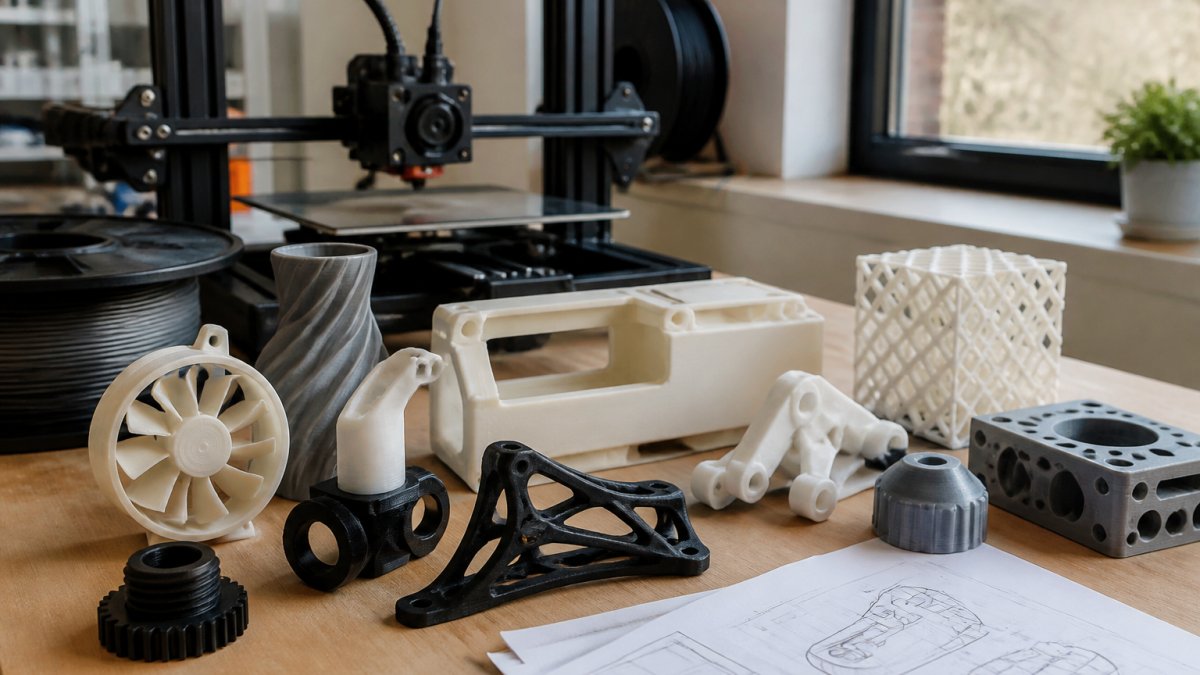
Best 3D Printing Services for Startups in 2026
Table of Contents
- Quick Comparison: Top 3D Printing Services for Startups
- 1. Alex 3D Print Us LLC, Best Overall for Startups
- 2. Fictiv, Best for High-Precision Parts and Design Optimization
- 3. Craftcloud, Best Budget Option for Simple Prototypes
- How to Reduce 3D Printing Costs for Prototypes
- 3D Printing Materials for Functional Prototypes
- 3D Printing Turnaround Time for Prototypes: What to Expect
- Scaling From Prototype to Full-Scale Production
- 3D Printing Services for Product Prototypes: What to Look For
- Common Mistakes Startups Make With 3D Printing Services
- Frequently Asked Questions
Last Updated: October 7, 2026
Quick Comparison: Top 3D Printing Services for Startups
Choosing the best 3d printing services for startups can mean the difference between rapid iteration and months of delays. The "best" service depends on your timeline, material needs, and scaling plans.
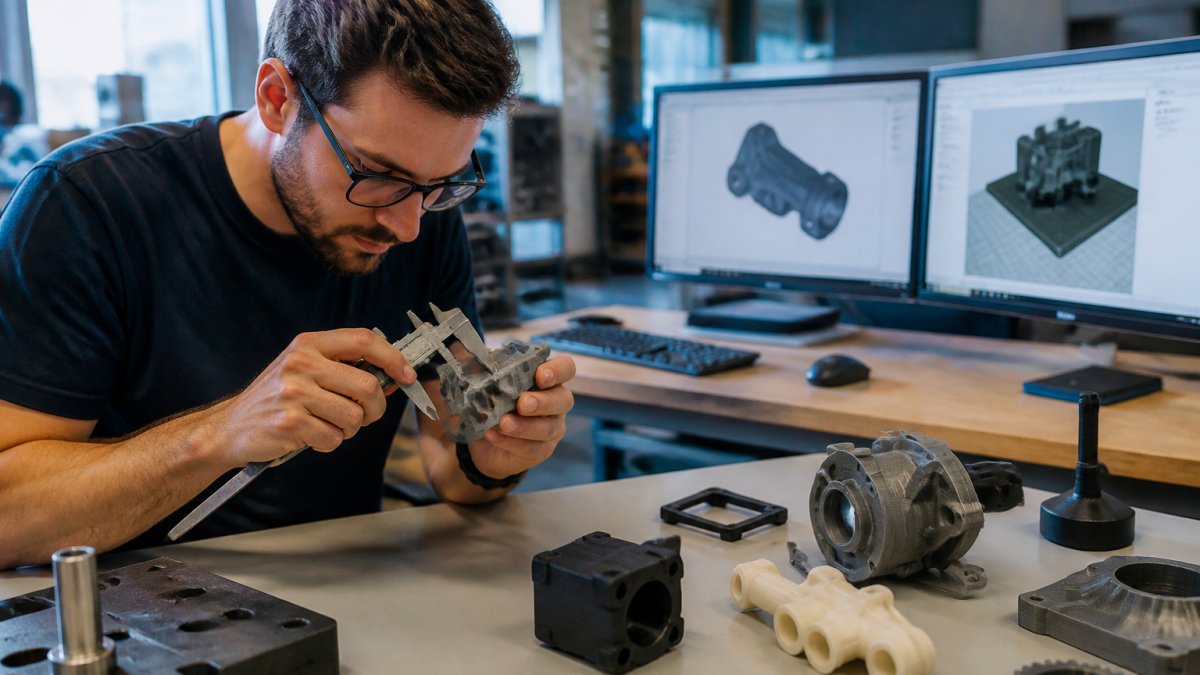
Most startups chase the lowest quote without considering quality variance, turnaround reliability, or design complexity. The services below represent different philosophies: some prioritize speed, others material performance, and a few excel at guiding inexperienced teams.
Quick Picks:
- Best Overall for Startups: Alex 3D Print Us LLC, turnkey engineering support with instant quotes and multi-color printing capability
- Best for High-Precision Parts: Fictiv, excellent communication and design optimization support
- Best Budget Option: Craftcloud, aggregated pricing across multiple vendors for cost comparison
- Best for Production-Grade Materials: Carbon, high-performance parts ready for end-use applications
- Best for Detail and Surface Finish: Formlabs, exceptional resolution and material library
- Best for Functional Components: Markforged, carbon fiber and metal reinforcement for high-strength parts
- Best for Aesthetic Finishing: 3ERP, comprehensive post-processing and finishing services
- Best for Speed and Scale: RapidDirect, automated quoting and ISO-certified quality management
1. Alex 3D Print Us LLC, Best Overall for Startups
Alex 3D Print Us LLC handles the entire workflow from design feedback through final fabrication. Our 3D printing services for startups include turnkey engineering: if your CAD file needs optimization for printability, we flag it before quoting.
With Bambu Lab multi-color printing, you get branded prototypes, color-coded functional parts, and promotional items that look finished on day one.
Our instant quote system accepts STL files directly: upload, get a quote, place an order. The xTool UV and MOPA laser engraving also lets you add logos, serial numbers, or technical markings without a separate vendor.
We offer both a quote system and design review, which helps avoid printing parts that don't fit together or exceed material tolerances.
2. Fictiv, Best for High-Precision Parts and Design Optimization
The tradeoff is cost: premium pricing reflects the engineering support and quality assurance. For simple prototypes this is overkill, but for functional products the engineering review pays for itself.
3. Craftcloud, Best Budget Option for Simple Prototypes
Turnaround and shipping also vary by vendor; the cheapest option might be in a different region, adding days to lead time.
How to Reduce 3D Printing Costs for Prototypes
The biggest cost lever isn't the vendor, it's design optimization. Parts designed for CNC or injection molding are expensive to 3D print because they require extensive support material and post-processing.
Design for additive manufacturing means thinking about how the printer works. Vertical walls are cheap; thin walls and overhangs are expensive because they need support structures that waste material and require manual removal.
We provide design feedback. Upload your file and request a review before quoting; we'll suggest where to remove material, how to orient the part, and whether a cheaper material works.
Batch ordering is another lever: printing five parts at once costs less per unit than printing one part five times. If your design is stable, order a small batch instead of iterating one at a time.
Material choice impacts cost: resin costs more than plastic, and metal costs significantly more than both. If your prototype only demonstrates form factor, plastic suffices; upgrade only if it must handle mechanical stress or heat.
Lead time flexibility saves money: if you can wait 2-3 weeks instead of 3-5 days, vendors offer discounts, since tight turnarounds lock up production capacity.
3D Printing Materials for Functional Prototypes
Choosing the right material is where most startups overspend or undershoot. The practical breakdown:
Plastic (FDM) is the cheapest and fastest, best for form-factor prototypes, enclosures, and parts that don't handle mechanical stress. It deforms around 60-80°C, so it's fine for consumer electronics but not near an engine or heated surface.
Resin (SLA/DLP) offers excellent detail and surface finish. Better mechanical properties than plastic, more heat-resistant. Costs more and takes longer. Use this when you need dimensional accuracy, tight tolerances, or a finished appearance. Common in medical devices, dental models, and precision mechanical components.
Nylon (SLS) is tough and flexible, handling mechanical stress better than plastic or resin at a cost between the two. Good for functional parts that flex or absorb impact, like hinges, clips, and mechanical assemblies.
Metal (sintering/DMLS) is production-grade but expensive, used when you need the actual properties of aluminum or titanium: heat resistance, strength-to-weight ratio, electrical conductivity. For most prototypes it's overkill; reserve it for parts going into production.
Material selection also affects post-processing: metal parts need heat treatment, resin parts often need UV curing, and plastic parts are usually ready to use. Factor post-processing time and cost into your material decision.
3D Printing Turnaround Time for Prototypes: What to Expect
Turnaround time varies dramatically based on vendor capacity, part complexity, and material choice.
Standard turnaround is 5-7 business days for most vendors. This includes design review, slicing (preparing the file for the printer), printing, and basic finishing. This is the baseline if you're not paying for expedited service.
Fast turnaround (3-5 days) costs more because it bumps your job to the front of the queue and often requires overnight shipping. Expect a 20-40% premium on the base price.
Rush turnaround (24-48 hours) is available from some vendors but at a significant markup. This is for genuine emergencies, trade show deadlines, investor demos, critical design iterations. Most startups don't need this regularly.
Complexity extends turnaround. A simple box takes 3 days. A part with intricate geometry, tight tolerances, and multiple materials takes longer because the vendor needs to review the design, plan support structures, and potentially break it into multiple print runs.
Material choice affects timeline. Plastic prints fastest. Resin takes longer because it requires post-curing. Metal requires sintering and heat treatment, extending timeline to 2-3 weeks.
Upload your STL file for an instant quote →
Submitting a complete, print-ready file helps ensure quoted timelines are met. Delays can arise from design iterations or incomplete specifications. Have your CAD file finalized before requesting a quote.
Scaling From Prototype to Full-Scale Production
This is where most startup-vendor relationships break down. The vendor that's perfect for 10 prototype parts often can't handle 1,000 parts per month.
Small-batch production (50-500 parts) is where many vendors excel. It's between prototype and full manufacturing. Costs per unit drop significantly compared to one-off prototypes, but you're not yet at injection molding scale.
Volume pricing matters here. Get a quote for 50 parts, 100 parts, and 500 parts. Most vendors have tiered pricing, the per-unit cost drops as volume increases. Understand the pricing curve before committing.
Scaling requires vendor capacity. A small shop with two printers can handle prototype work but can't suddenly produce 500 parts per month. Before you scale, confirm the vendor has the production capacity and can maintain quality at volume.
Material consistency becomes critical at scale. A single prototype can have minor color variation or surface finish imperfection. 500 parts need to look identical. Vendors with multiple identical printers and strict quality control handle this better than shops with one-off machines.
Alex 3D Print Us LLC supports scaling through our turnkey engineering approach, we optimize your design for volume production, whether that's multi-color printing for 200 units or identifying when you should switch to injection molding.
3D Printing Services for Product Prototypes: What to Look For
When evaluating 3D printing services for startups, consider factors beyond just price.
Design support is underrated. We review your file before quoting, flag manufacturability issues, suggest material alternatives, and optimize for cost. This saves you money and time.
Technology diversity matters if your needs evolve. A vendor with FDM, SLA, and SLS capability can handle different materials and geometries. If they only do plastic, you're limited.
Quality assurance processes separate reliable vendors from cheap ones. Ask about their quality checks, do they inspect every part, or just random samples? Do they have ISO certifications? What's their defect rate?
Communication speed is a proxy for reliability. If they respond to quotes in 2 hours, they're likely to meet delivery deadlines. If it takes 24+ hours to get a quote, expect similar delays throughout your project.
Post-processing capabilities matter more than most startups realize. Some vendors include basic finishing (support removal, light sanding). Others charge extra or won't do it at all. If you need painted, laser-engraved, or assembled parts, confirm the vendor can handle that before ordering.
Intellectual property security is critical for startups. Confirm the vendor has confidentiality agreements and doesn't share designs or prototypes with competitors. Ask about their data retention and deletion policies.
Common Mistakes Startups Make With 3D Printing Services
Mistake 1: Ordering without a complete design. Finalize your design before requesting a quote to avoid delays and potential rework.
Mistake 2: Chasing the lowest price without considering quality. Be cautious of quotes that seem significantly cheaper, as they may indicate longer lead times or lower quality. Consider getting multiple quotes.
Mistake 3: Not specifying tolerances clearly. If your CAD file doesn't specify tolerances, we will use our standard. If you need tighter tolerances, know your requirements before quoting.
Mistake 4: Expecting perfect results from the first print. 3D printing is iterative. Plan for iterations before you have a design you're happy with. Budget time and money for this cycle.
Mistake 5: Ordering single parts repeatedly instead of batches. Printing one part five times costs more per unit than printing five parts once. If your design is stable, batch order. You'll save money and get faster turnaround.
Mistake 6: Using the wrong material for the application. Plastic looks good but doesn't handle mechanical stress. Metal is overkill for form-factor prototypes. Match material to function, not to budget.
Mistake 7: Not planning for post-processing. Many startups assume parts arrive ready to use. Most require support removal, sanding, painting, or assembly. Budget time and cost for finishing before ordering.
Frequently Asked Questions
How should a startup choose a 3D printing service for prototypes?
Evaluate services based on three factors: material compatibility with your product requirements, turnaround time against your development timeline, and total cost including design support and post-processing. Request sample quotes for your specific geometry and material needs. Check whether the service offers turnkey engineering support or if you must optimize designs yourself. Verify that their quality assurance processes match your tolerances and that they can handle your CAD file format without requiring conversion.
How can startups reduce the cost of 3D printing prototypes?
Design for additive manufacturing by minimizing support material, consolidating multi-part assemblies into single prints, and choosing materials that match functional requirements rather than overspecifying. Batch multiple iterations into a single production run to spread setup costs. Negotiate volume discounts as your prototype cycle grows. Use cost-effective materials like standard thermoplastics for early iterations, then switch to production-grade materials only for final validation. Many services offer automated quoting, submit multiple design variations to identify the most economical geometry.
Which 3D printing process is best for product prototypes?
FDM (fused deposition modeling) suits early-stage prototypes and cost-sensitive iterations. SLA (stereolithography) and SLS (selective laser sintering) deliver higher detail and functional strength for later-stage validation. For parts requiring visual accuracy and surface finish matching production units, SLA excels. For functional testing of mechanical components, SLS and carbon fiber-reinforced options provide strength comparable to injection-molded parts. Choose based on whether you prioritize speed and cost (FDM) or final-product fidelity (SLA/SLS).
What post-processing capabilities should startups expect from 3D printing services?
Professional services typically offer surface finishing, painting, plating, and assembly support. Verify whether your chosen vendor includes these or charges separately. Post-processing significantly affects final appearance and function, laser engraving for branding, annealing for strength, and surface polishing for aesthetic prototypes are common add-ons. Confirm turnaround times for post-processing, as finishing can add 3-5 days to your total lead time.
Choosing the right best 3d printing services for startups comes down to matching your immediate need, speed, cost, precision, or scaling, with the vendor's strength. For most startups, Alex 3D Print Us LLC delivers the best balance of speed, design support, and production flexibility. Our turnkey engineering approach means you're not managing multiple vendors or worrying whether your CAD file is print-ready. Upload your STL file for an instant quote and get started on your prototype today.