
Custom Fabrication Services for Tech Startups
Table of Contents
- What Custom Fabrication Services Offer Tech Startups
- Custom Manufacturing Examples for Product Development
- 3D Printing Services for Prototypes: Materials and Methods
- How to Reduce 3D Printing Costs for Prototypes
- Rapid Prototyping Services: Speed, Quality, and Complexity
- Choosing a Fabrication Provider: What Startups Should Know
- Comparison Table: Key Features and Capabilities
- Frequently Asked Questions
Last Updated: October 11, 2026
What Custom Fabrication Services Offer Tech Startups
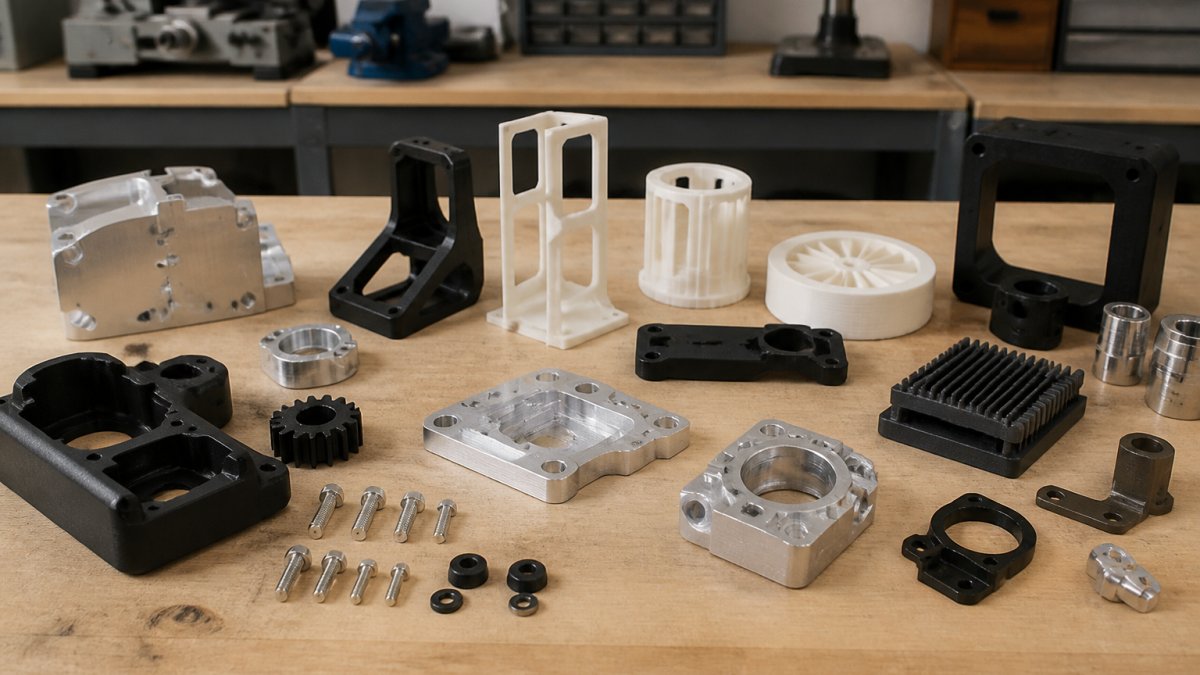
Custom fabrication services are specialized manufacturing operations that build parts, prototypes, and products to your exact specifications rather than selling off-the-shelf items. For tech startups, these services eliminate the need to invest in expensive equipment or hire a full manufacturing team before you've validated your product idea.
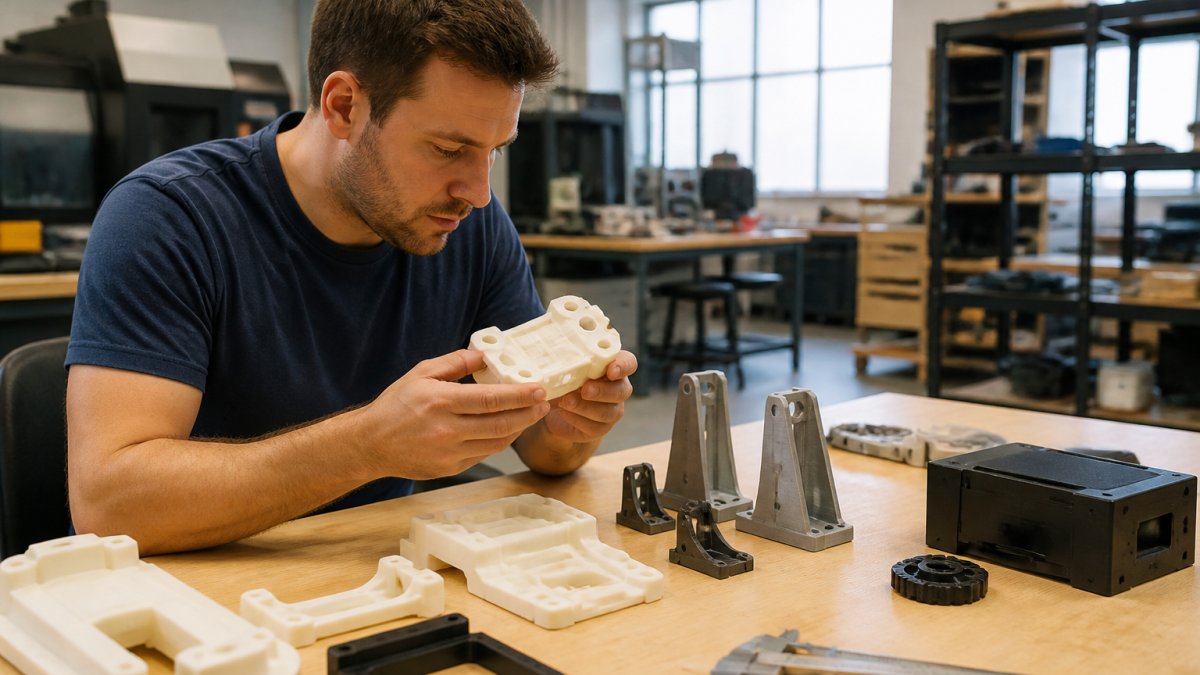
The core value is speed and flexibility. You design something, upload your files, and receive finished parts in days rather than weeks. This matters enormously when you're iterating rapidly or preparing for a product launch. At Alex 3D Print Us LLC, we handle the entire workflow, from design to fabrication, so you can focus on getting your product to market.
Most tech startups face a common problem: traditional manufacturers have minimum order quantities that don't match early-stage needs. You might need 50 units for a trade show, not 5,000. Custom fabrication services fill that gap. They work with small batches and handle one-off prototypes just as efficiently as larger runs.
The services typically include multiple fabrication methods. 3D printing produces complex geometries that traditional machining can't achieve. Laser engraving adds branding, serial numbers, or detailed markings directly onto finished parts.
Custom Manufacturing Examples for Product Development
Real-world applications show how startups use custom fabrication to solve specific problems.
The flexibility matters as much as the capability. Early prototypes often don't work as expected. You discover that a part is slightly too thick, or the cable routing doesn't fit, or the mounting holes are in the wrong position. With custom fabrication, you iterate quickly.
Send revised CAD files, receive new parts within days, test again, and refine. This cycle repeats until your design is production-ready.
Trade show and promotional applications are equally important. Tech startups often need branded displays, custom nameplates, or promotional items that reflect their brand identity. Laser engraving adds precision to metal or wood pieces. Multi-color 3D printing produces eye-catching promotional products. These finished items communicate professionalism and build brand recognition with potential customers and investors.
Design support accelerates the process further. Many startups have CAD files but lack manufacturing experience. A good fabrication partner reviews your design, identifies potential issues, and suggests improvements before production starts. This prevents costly mistakes and reduces iteration cycles.
3D Printing Services for Prototypes: Materials and Methods
3D printing has become the fastest way to turn digital designs into physical parts. The technology works by building objects layer by layer from digital files, typically STL or STEP format. This method handles complex geometries that traditional machining struggles with, internal channels, organic shapes, and intricate details.
Material selection determines both the part's properties and the final cost. Multi-color 3D printing produces realistic product mockups with different colored sections in a single print, eliminating assembly time.
Turnaround time is the real advantage. This speed matters enormously when you're racing to validate a concept or prepare for investor meetings.
Quality consistency has improved dramatically over the past few years. Modern 3D printers maintain tight tolerances. Post-processing, sanding, painting, or coating, can improve surface finish if your application requires it.
How to Reduce 3D Printing Costs for Prototypes
Cost control matters when you're burning through iterations. Several strategies reduce expenses without sacrificing quality or speed.
Optimize your design first. Thinner walls use less material and print faster. Removing unnecessary internal geometry saves both material and print time. Hollow sections with support structures inside reduce weight and cost.
A fabrication partner who reviews your CAD file before printing can spot these opportunities.
Batch your prototypes strategically. If you need multiple parts, print them together on the same build platform. This spreads the fixed costs of setup and machine time across more units. A single large print run costs less per unit than printing the same parts separately.
Choose the right material for the application. Standard polymer materials cost less than reinforced or specialty materials. If you're testing fit and form, standard materials work fine. Reserve premium materials for final prototypes that need to withstand real-world testing.
This staged approach reduces costs while you're still validating the design.
Communicate clearly with your fabrication provider about your constraints. If you have a tight budget, they can suggest design modifications that reduce cost without compromising function. If you have a deadline, they can prioritize your job and potentially expedite production. Many providers, including Alex 3D Print Us LLC, offer instant quote systems where you upload your STL file and see pricing immediately. This transparency lets you make informed decisions about material and method before committing.
Upload your STL file for an instant quote →
Rapid Prototyping Services: Speed, Quality, and Complexity
Rapid prototyping bridges the gap between concept and production. It's not just about speed, it's about getting functional prototypes that accurately represent your final product so you can test, validate, and iterate before committing to expensive tooling.
Speed is the obvious benefit. Rapid prototyping services can deliver functional parts in days, not weeks. This acceleration changes your product development timeline. Instead of waiting two months to test a new design, you test it in two weeks.
Over the course of a product development cycle, this compounds into significant time savings.
Complexity is where rapid prototyping excels. Traditional manufacturing has limitations. Tight internal channels, undercuts, and intricate geometries require expensive custom tooling. Rapid prototyping handles these shapes with no additional cost or complexity.
Your design can be as sophisticated as your engineering requires.
Quality matters for functional testing. Your prototype needs to behave like the final product so your test results are meaningful. If the prototype is fragile or inaccurate, your testing data becomes unreliable. Good rapid prototyping services maintain tight tolerances and use materials that closely match your production material properties.
This ensures that prototype testing translates into production performance.
The complexity of your project determines which fabrication methods work best. A fabrication provider evaluates your specific requirements and recommends the most efficient method.
Choosing a Fabrication Provider: What Startups Should Know
Selecting the right fabrication partner affects your timeline, budget, and product quality. Several factors separate reliable providers from mediocre ones.
Design and engineering support matters more than you might expect. You're paying for expertise, not just machine time. A provider who reviews your CAD files and suggests improvements prevents costly mistakes. They understand design-for-manufacturing principles and can identify potential issues before production.
This guidance saves money and reduces iteration cycles.
Turnaround time commitments should be explicit. Ask about typical lead times for different services and whether they can accommodate rush requests. Match their capabilities to your timeline. Also ask about their capacity during peak periods, can they still deliver on schedule when demand is high?
Quality assurance processes ensure consistency. Ask about their inspection procedures, tolerance verification, and how they handle out-of-spec parts. Reliable providers are transparent about their QA processes.
Intellectual property protection matters for startups with proprietary designs. Ask about their confidentiality practices. How do they protect your design files? What happens to files after your project is complete?
Established providers have documented IP protection policies.
Pricing transparency prevents surprises. Request quotes in writing that specify what's included, material, labor, finishing, shipping. Ask about setup fees, minimum order quantities, and whether pricing changes with volume. Some providers offer instant quote systems where you upload your file and see pricing immediately.
This transparency helps you budget accurately. At Alex 3D Print Us LLC, we provide instant quotes for STL files so you know costs before committing.
Communication and responsiveness indicate how they'll handle your project. Do they answer questions quickly? Do they provide design feedback proactively? Will they work with you to solve problems if something unexpected comes up?
These soft factors often matter more than price alone.
| Factor | Why It Matters | What to Ask |
|---|---|---|
| Design support | Prevents costly mistakes and reduces iterations | Do you review CAD files before production? Can you suggest design improvements? |
| Turnaround time | Affects your product development timeline | What are typical lead times? Can you guarantee 3-5 days? |
| Quality assurance | Ensures parts meet your specifications | How do you verify tolerances? What's your process for out-of-spec parts? |
| IP protection | Safeguards your proprietary designs | Do you sign NDAs? How are design files handled after completion? |
| Pricing transparency | Prevents budget surprises | What's included in your quote? Are there hidden setup or finishing fees? |
| Communication | Determines how smoothly your project progresses | How quickly do you respond? Will you work with us to solve problems? |
Comparison Table: Key Features and Capabilities
| Provider | Specialization | Key Capabilities | Best For | Notable Features |
|---|---|---|---|---|
| Alex 3D Print Us LLC | 3D printing & custom fabrication | Turnkey engineering, multi-color 3D printing, laser engraving, design services | Tech startups needing prototypes and branded items | Instant STL quote system, fast turnaround, support for complex projects |
| Protolabs | Machining & sheet metal | CNC machining, sheet metal fabrication, injection molding | Engineering teams with precision part needs | Established manufacturing supplier, multiple processes available |
| Rapid Axis | Sheet metal fabrication | Custom sheet metal work, direct support | Startups focused on metal components | Direct supplier relationship, broad fabrication range |
| Simtech | Thermoplastic fabrication | Custom thermoplastic parts, design/build services | Product teams developing plastic enclosures | Design support available, 30+ years experience |
| PEKO Precision Products | Sheet metal fabrication | Metal fabrication and precision work | Teams requiring metal components | Listed among established sheet metal providers |
Choosing a custom fabrication service for your tech startup comes down to matching your specific needs to the provider's strengths. If you need rapid iterations on prototypes with design support, Alex 3D Print Us LLC offers turnkey engineering, multi-color 3D printing with Bambu Lab technology, and laser engraving capabilities, all with fast turnaround times. Upload your STL file for an instant quote and see exactly what your project will cost before you commit. We handle projects of any complexity, from initial concept through production-ready parts, so you can focus on building your product instead of managing multiple vendors.
Frequently Asked Questions
What custom fabrication services do tech startups need most?
Tech startups typically need 3D printing for rapid prototyping, laser engraving for branding and product marking, and design-to-manufacturing support. Many startups also require turnkey services that handle engineering, design, and fabrication in one place, reducing the need to coordinate multiple vendors. Fast turnaround and flexible order quantities are critical for iteration cycles.
How can a startup reduce the cost of a fabricated prototype?
Optimize your design for the fabrication method before quoting, simpler geometries cost less. Order multiple parts in a single run rather than separate batches. Choose materials strategically; some options cost significantly less than others. Work with providers offering instant quoting systems to avoid setup fees. Consider batch production of successful prototypes instead of one-off builds. Provide clean, production-ready CAD files to avoid rework charges.
How long does custom fabrication take for a prototype?
Turnaround depends on complexity, material, and provider capacity. Simple 3D-printed parts can ship quickly. Laser-engraved items can be completed in days if designs are finalized. Always confirm lead times before ordering, especially if you're on a tight product development schedule.
What information should I provide when requesting a fabrication quote?
Submit a complete STL or CAD file in the correct format. Specify materials, desired finishes, and any post-processing (coating, assembly, engraving). Include quantity and delivery deadline. If tolerances are critical, state them explicitly. For multi-part assemblies, clarify whether you need components separate or pre-assembled. Mention any intellectual property concerns or confidentiality requirements upfront. The more detail you provide, the more accurate your quote will be.
What is the difference between prototyping and custom manufacturing?
Prototyping focuses on functional testing and design validation, usually small quantities, fast iteration, and acceptable minor imperfections. Custom manufacturing produces finished products for sale or use, requires higher precision, consistent quality, and often larger volumes. Rapid prototyping services bridge the gap, allowing startups to test designs quickly before committing to full production. Many providers support both phases, helping you scale from prototype to production without switching vendors.